
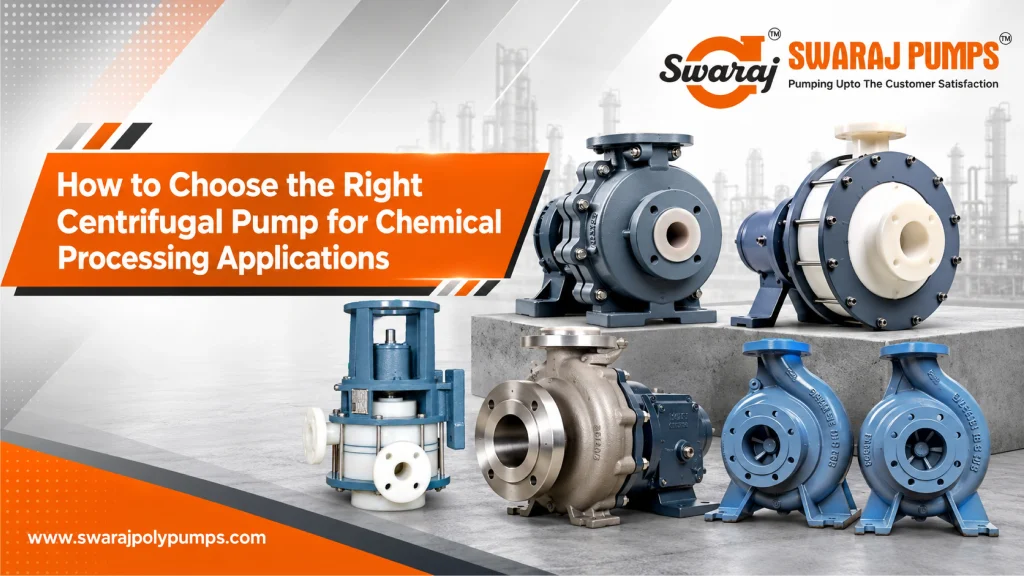
How to Choose the Right Centrifugal Pump for Chemical Processing Applications
Centrifugal pumps play an important role in chemical processing plants, where liquids need to be transferred reliably between storage tanks, processing equipment, pipelines, and different stages of production. However, selecting the right centrifugal pump for chemical industry applications requires more than simply choosing a pump based on flow rate or motor power.
Chemical processes often involve corrosive, abrasive, toxic, volatile, or high-temperature fluids. A pump that works effectively with water or other non-aggressive liquids may not be suitable for handling acids, solvents, chemicals, or specialized process fluids.
The right pump selection can improve operational reliability, reduce maintenance requirements, minimize leakage risks, and support consistent production. This article explains the key factors that should be considered when selecting a centrifugal pump for chemical processing applications
1. Understand the Process Fluid
The first step in selecting a centrifugal pump is understanding the characteristics of the liquid being pumped.
Chemical processing fluids can have significantly different properties depending on the application. Important parameters include:
- Chemical composition
- Corrosiveness
- Viscosity
- Density
- Temperature
- Presence of suspended solids
- Vapor pressure
- Toxicity and hazardous characteristics
For example, a pump designed for clean water may not be appropriate for concentrated acids or aggressive solvents. Chemical compatibility should therefore be considered before finalizing the pump design and construction materials.
Understanding the fluid also helps determine the appropriate impeller, casing, shaft, seal, and other wetted components.
2. Determine the Required Flow Rate
Flow rate is one of the most important parameters when choosing a centrifugal pump for chemical industry applications.
Flow rate represents the quantity of liquid that the pump needs to transfer within a specific period. It is generally expressed in units such as litres per minute (LPM), cubic metres per hour (m³/h), or gallons per minute (GPM).
The required flow rate depends on the chemical process and the equipment connected to the pumping system.
When determining flow requirements, consider:
- Normal operating flow
- Minimum required flow
- Maximum process flow
- Future production requirements
- Batch processing requirements
- Changes in operating conditions
Selecting a pump that is significantly oversized can result in inefficient operation, unnecessary energy consumption, and increased wear. Similarly, an undersized pump may fail to deliver the required process flow.
3. Calculate the Required Pump Head
Flow rate alone is not sufficient for pump selection. The pump must also generate enough pressure to move the liquid through the complete system.
Pump head represents the energy required to move the fluid from one point to another. It can be affected by:
● Vertical elevation
● Pipeline length
● Pipe diameter
● Pipe fittings
● Valves
● Filters
● Heat exchangers
● Process equipment
● Pressure differences between tanks
The total dynamic head should be calculated carefully before selecting the pump.
A pump with insufficient head may not achieve the required flow at the destination, while excessive head can cause throttling, energy losses, and inefficient operation.
4. Select the Correct Construction Material
Material selection is particularly important for chemical pumping applications.
The wetted parts of the pump must be compatible with the process fluid. Depending on the chemical and operating conditions, manufacturers may use materials such as stainless steel, alloy materials, plastics, or specialized corrosion-resistant materials.
Material selection should consider both chemical compatibility and operating temperature.
For aggressive chemicals, even small compatibility issues can eventually lead to corrosion, leakage, reduced pump life, or unexpected shutdowns.
Therefore, the material of construction should be selected based on actual chemical properties rather than general assumptions.
5. Consider Operating Temperature
Temperature can significantly affect pump performance and component life.
Chemical processes may involve liquids at ambient, elevated, or very low temperatures. Changes in temperature can affect fluid viscosity, vapor pressure, material strength, and seal performance.
Before selecting a centrifugal pump for chemical industry, determine:
- Normal operating temperature
- Minimum temperature
- Maximum temperature
- Temperature fluctuations
- Heat generated during operation
The pump’s casing, mechanical seal, bearings, elastomers, and other components should be suitable for the expected temperature range.
6. Check Fluid Viscosity and Density
Centrifugal pumps are generally well suited to low- and moderate-viscosity liquids. However, increasing viscosity can affect pump performance.
Highly viscous fluids require greater energy to move through pipelines and may result in lower flow and increased power requirements.
Fluid density also influences the power required by the pump.
Therefore, pump selection should account for the actual operating viscosity and density of the chemical rather than using water-based assumptions.
For applications involving high-viscosity liquids, alternative pump technologies may sometimes be considered depending on the process requirements.
7. Evaluate NPSH and Cavitation Risk
Net Positive Suction Head, commonly known as NPSH, is another important factor in centrifugal pump selection.
If the pressure at the pump suction falls below the liquid’s vapor pressure, vapor bubbles can form inside the pump. This condition is known as cavitation.
Cavitation can result in:
- Noise and vibration
- Reduced pump performance
- Impeller damage
- Increased maintenance
- Shorter equipment life
The available NPSH in the system should be greater than the pump’s required NPSH, with an appropriate safety margin.
Proper suction piping, tank positioning, liquid temperature, and pump selection can all contribute to reducing cavitation risk.
8. Choose the Appropriate Mechanical Seal
Chemical pumps often require specialized sealing arrangements because leakage can create safety, environmental, and operational concerns.
The mechanical seal should be compatible with:
- Process chemical
- Temperature
- Pressure
- Pump speed
- Fluid characteristics
Depending on the application, single mechanical seals, double mechanical seals, cartridge seals, or other specialized configurations may be considered.
For hazardous or highly corrosive chemicals, seal selection should receive particular attention during the pump specification stage.
9. Consider Pump Efficiency and Energy Consumption
A chemical processing plant may operate pumps continuously for long periods. Consequently, even a small difference in pump efficiency can have a significant impact on operating costs over time.
The selected pump should operate close to its Best Efficiency Point (BEP) under normal process conditions.
Consider:
- Pump efficiency
- Motor efficiency
- Operating speed
- System resistance
- Expected operating hours
- Variable flow requirements
For systems where flow requirements vary, variable frequency drives (VFDs) may help adjust pump speed according to process demand, depending on the application.
10. Look at Maintenance and Reliability
Chemical processing environments often require high equipment availability. Unexpected pump failures can interrupt production and increase maintenance costs.
When evaluating a centrifugal pump for chemical industry, consider the accessibility of:
- Mechanical seals
- Bearings
- Impellers
- Wear components
- Couplings
- Other serviceable parts
A pump with a practical maintenance design can help reduce downtime and simplify servicing.
Spare parts availability and manufacturer support should also be considered, especially for critical process applications.
11. Consider Safety and Industry Requirements
Chemical plants often operate under strict safety and environmental requirements. Pump selection should therefore take into account the nature of the chemical, operating environment, containment requirements, and applicable industry standards.
For hazardous or flammable fluids, the complete pumping system may need additional safety considerations, including appropriate motor and electrical equipment, sealing arrangements, grounding, and containment systems.
The pump specification should be reviewed with the plant’s engineering, safety, and maintenance teams before procurement.
12. Review the Complete Pumping System
One common mistake is selecting a pump based only on its catalogue flow rate and head.
A centrifugal pump does not operate independently. Its performance depends on the complete system, including the suction line, discharge piping, valves, tanks, fittings, and process equipment.
Before final selection, review the complete system curve and pump performance curve.
The operating point should ideally fall within an appropriate range of the pump’s performance characteristics. This helps ensure stable operation and can reduce excessive vibration, recirculation, energy consumption, and component wear.
Conclusion
Choosing the right centrifugal pump for chemical industry applications requires a detailed understanding of the process, fluid properties, system requirements, and operating environment. Flow rate and head are important starting points, but they are only part of the selection process.
Chemical compatibility, temperature, viscosity, NPSH, sealing, materials of construction, efficiency, maintenance, and safety requirements should all be evaluated before finalizing the pump.
A properly selected centrifugal pump can provide dependable fluid transfer, improve process efficiency, reduce maintenance requirements, and support reliable plant operation. Working with an experienced pump manufacturer or engineering specialist can also help ensure that the selected equipment matches the actual requirements of the chemical processing system.